Where the Rainbird sings..
Where the Rainbird sings..


Here in the rice and sugarcane fields deep in the central Philippines, the heat of the day has reached its peak, emphasising the stark contrast between the calm landscape and the economic hardships that weigh heavily on daily life. The humidity is through the roof, and even the dogs have slunk away into the shade, their tongues hanging out as they try to cool down, reflecting the pervasive hardship in this region. Yet the resilience of these communities shines through, inspiring the audience with admiration for their endurance amid adversity.
I am lying on my bed, staring at the ceiling fan, trying to slice through the warm, heavy air that hangs thick in the room. Luckily, it creates a slight downward wind, making it a bit more tolerable to lie motionless on the bed, staring into the air, letting my thoughts wander. Some faint music from nearby adds a soothing backdrop. Having been here for several months now, in the central Philippines, on one of the poorest islands and provinces, I am trying to gather material for my story, an account of the stark inequality and resilience I witness daily, including photographs that capture this complex reality of my host island nation. Coming to this place for about thirty years now, besides some developments like malls and new suburbs on the outskirts of town, nothing much has changed. Still, myriads of tricycles swarm the road, now complemented by ever more vehicles as well as pedicabs and electric scooters. Most old jeepneys have been phased out, replaced by newer types, even the latest ones with air conditioning, while long-distance buses still plough the national highway and country roads at breakneck speeds.

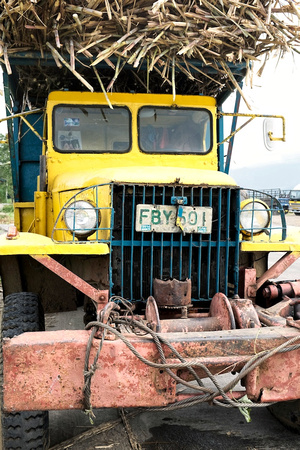
Many sakadas-seasonal sugarcane workers- and OFWs (Overseas Foreign Workers) face systemic challenges like exploitation, low wages, and limited social protections, highlighting the ongoing social inequality that shapes the community's resilience and struggles. The backbone of this province, sugarcane, remains ever so dominant in the landscape, with overloaded trucks delivering cane from the fields to sugar mills across the province. Huge haciendas and estancias run by various family clans that are big landowners still dominate the economy and the daily lives of the common people. Agricultural methods seem to have stood still, with workers (sakadas) still slicing and cutting through the meter-high cane fields with the simplest of tools, the Bolo, also known as a machete. In all my years, I seem to remember having only seen a combine harvester on these vast sugar cane fields once. Of course, then the argument remains that if the harvesting is fully mechanised, which I believe is possible these days with big investments into the combined harvesters, what, then, will happen to the myriads of Sakadas? Many of them would join the unemployed, underemployed or poorly employed and exploited masses one already finds in all cities and barangays of the island. Men' shooting the breeze' from early morning, in most cases not because they want to, and especially not because they can, but there is not enough work for everyone. And even the work that is available is often poorly paid, with restrictions placed on people like:' not older than 20-something, must be good looking', especially for women's employment, or age limitations arbitrarily enforced. Another sly trick is to employ people on temporary contracts with lower wages and minimal or no social security for just under six months, then fire them so they don't have to offer them permanent contracts before reaching the six-month employment date. As labour is so 'cheap', one sees dozens of associates or better sales personnel in shops and department stores, with every aisle having like two attendants, because the costs are minimal. This highlights ongoing social inequality and its impact on workers' livelihoods, illustrating the precariousness many Filipino workers face, both locally and abroad.


So the question arises, how do people survive under those circumstances? Well, many get by through odd jobs, working on haciendas and estancias as agricultural workers (obreros) on minimum wages or less, with everyone in the family having to contribute as best they can, or selling their little produce of vegetables and fish, etc., at town markets. For example, I met a family in a small barangay whose children skipped school to help their parents sell fish at the market, risking their education for immediate income. Often, this means children do not attend school regularly or at all, as there is no enforcement to attend. This lack of access to education hampers community development and perpetuates cycles of poverty, raising concerns about the long-term prospects for these children and their communities. Without education, opportunities for upward mobility are limited, trapping families in a cycle of hardship and social inequality that persists across generations, as I have observed in many rural areas over the years. Addressing these educational gaps is crucial for breaking the cycle of poverty and fostering sustainable development.

The more fortunate families are those where one or even more family members managed to get a job as an 'Overseas Foreign Worker' (OFW) in a faraway and distant land, often in the wider Gulf Region of the Near and Middle East or East Asia. The majority of these OFWs are female, working as Nannys, maids or else for families that are not seldom unappreciative or outright hostile towards them, with some form of abuse often reported. Nonetheless, there are also professionals working in sales and administration, financial businesses, and the hospitality industry (Hotels), as engineers or architects, etc. Still, the majority are maids and/or household service workers. These OFWs contribute about 10 billion US dollars annually to the Philippines through remittances, enabling their often extended families not only to survive but also to experience a slightly better life than the average. A big part of these remittances plays the so-called 'Balikbayan Boxes', which are sent from those countries to families back home. These boxes are filled with everything from food to electronics to other useful items for the loved ones at home. Often, when those OFWs come back on their sponsored holidays, in most cases every two years, one can observe them in the mall, fashionably dressed, with a whole tail of kids and older adults going to the fast-food restaurant for a treat. Locally, they are called 'one day millionaires' as often they spend the money they bring with them on the first day or week of their holiday, treating the whole family clan to food and new clothes or other items. This country owes a lot to those OFWs, and mostly it is the female workers who work the hardest and contribute the most, looking after whole extended families in the Philippines.
When asking young people or students out in the fields what they want to learn or study and which job they would like to pursue, one often hears that they want to be nurses or sailors. This is because those jobs often enable you to go abroad.

, especially nurses, as the Philippines seems to supply a large share of them worldwide, and sailors, as this profession pays well. These decisions are taken solely to help the family back home, to enable other siblings to attend private schools and pay for their tuition, so they have a better start in life, and yes, you guessed it, to even better support the family, too. People observe their neighbours and friends who have been lucky enough to succeed in those professions, and the desire to copy that success is overwhelming. Of course, many students choose other subjects, but those are from families that can afford them. It is hard, thinking of the rural and also minimum wage labour work force in the cities and barangays, not to stumble over the words 'bonded labour' or even 'slave'. This may be a hard judgment on my side, but it's not far from reality. Sometimes, in conversations with the people concerned above, they describe their situation with the same words.

Now that I have described the socio-economic situation of my host environment, what role do I play in all of this? Well, I have been coming to this 'environment' for 30 years since my mother-in-law passed away. Owing to our own socio-economic situation at the time, this was the first time I had travelled to the far-flung islands of the Philippines since our marriage 11 years earlier. My spouse had been visiting her family several times during those eleven years, but due to work and other commitments, I had not been able or keen to travel with her. The untimely death of her mother changed that, as I had no excuse not to come along for the funeral. I was a bit apprehensive as I knew that the family lived in the sugar cane fields of one of the haciendas near the town of Bago in the province of Negros Occidental. I had met my wife, an ICU nurse, eleven years earlier while working at the German embassy in Damascus, Syria, where I had been assigned.

Upon landing at the old airport in Sincang, Bacolod, a group of her family, mostly her two older sisters, met us with a hired Jeepney to bring us back to the sugar cane fields. Upon deplaning onto the tarmac of the small airport at the time, heat and humidity greeted me, and I understood what the tropics meant: relentless sunshine and humidity, exacerbated by rain. On our way from the airport to the family home, I was distracted by the views through the jeepney's open side windows. Green fields with people and water buffaloes, a distant mountain range dividing the island into occidental and oriental sides, visible through the day's haze, with Mount Kanlaon, a volcano, as the island's highest peak—a classic Asian romantic scene. Now I can not remember every detail of our arrival at the family home. Still, I was impressed by the wooden timbered traditional house, surrounded by flowers and orchids, located under a big mango tree. Everything was tidy and clean; the house was divided into two parts: the sleeping quarters, about 1.5 m above the ground, and the living quarters and kitchen, on the ground. We were welcomed by the rest of the family, including the father, who was still alive at the time. Everyone present was amazed by how tall the 'Kano' (local slang for foreigner) was and how white as well, and, apparently, I was deemed good-looking (gwapo).


The mother was lying in state, embalmed, in an open coffin (with a glass plate above the body) in the living room area of the house. This was entirely new to me, as the only death I had witnessed in the family so far was that of my grandparents, which was a rather anonymous affair. In Germany, death is somehow seen as something that has to be dealt with quickly and efficiently; within a few days, the funeral has to take place, with as little interaction as possible. Here in the Philippines, the dead person is embalmed and then returned to the house, to lie in state for a week or so, enabling neighbours, family and friends from near and afar to say their last goodbye and pay their respects. The family hosts all-night vigils, often accompanied by Bingo games and other community entertainment, and also provides food for those who come to pay their respects. This all happens in the same room, the dead body is lying in state, or in adjacent rooms, as well as outside of the house if the place provides for it. This was all new to me, and I was excited to be a part of it. I took to it like a fish to water, especially since it allowed me to get acquainted with the family and, of course, take photos. Now, all of this is not a solemn affair, but rather jolly at times, with laughter and lots of stories to be told and gossip to be exchanged among family, friends, and others who often haven't seen each other in years. On the day of the funeral, I remember that we all went to the biggest church in town, where a memorial service was held for my mother-in-law. The church was full of people, and the air was hot and thick, one could have sliced it. I felt like collapsing, the sweat running down the side of my face, into my eyes and the corners of my mouth. Of course, the last thing I could do was to collapse, not now and not here. I stood out in the whole crowd, because of my size and my skin, so I could not go down on the ground. It felt like the service took forever, and once it finally finished, we had to walk in procession to the cemetery, only two kilometres away, under a blazing February sun.

This year, i.e., in February 2026, we did the same for the oldest sister who passed away while we were here in the campo on our yearly visit. Her health had declined rapidly from 2023 to now; even last year, she was not well anymore. She was just a few weeks short of her 91st birthday, having lived a long but for sure not easy life, shaped by her early years through World War II and the Japanese occupation of the island. She had trained to become a fashion designer and tailor initially, but then in her young years had fallen for the same trap I might call it, met her sweetheart, got pregnant with her first child, as planned parenthood is a synonym of evil in this country for many, especially in those years of the early 1950, and abandoned her dream of being part of the fashion industry. Over the many years that followed, she gave birth to five children and toiled on the land in the service of one of the hacendados as an agricultural worker. This time the memorial service was in a small chapel near her home, and we only walked the distance between the house and the church, less than a kilometre. We were lucky, though, as it was on a day off between two low-pressure areas that brought a lot of rain before and after the funeral. Funerals are also social events, as described above, here and elsewhere around the world. This time it was no different.


Purok Masinadyahon
Driving south on the Negros National Highway, right after the bridge over the Bago River, is the left turn towards the Kanlaoon Volcano National Park. As is mostly the case on Negros Island, and especially in the province of Negros Occidental, the countryside is predominantly covered by Sugar Cane or Tubo, as it is widely called here in the local language, Hiligainon. The roads are often clogged with slow-moving Tubo Trucks that move day and night from the sugar cane fields of the haciendas to the sugar mills that are located at many places across the island of Negros. Often, the trucks drive in convoys at night and are halted on the side of the road before dawn to avoid rush-hour traffic, for example, in Bacolod City.


Once you take the turn from the Negors National Highway south onto the road to Maao, after a few hundred meters, one comes to the locality of Crossing Bago. Until the 1980s, this was the point where the old highway crossed the Bago River, and a bridge had been built in the 1920s before World War II; hence, this hamlet was called Crossing Bago. This bridge was a one-way bridge before crossing the Bago River to Bago and the south of Negros Occidental. The pillars can still be seen looking east. It was destroyed in 1991 by a major flood during Typhoon Ruping, when trees and logs from the mountains clogged it, practically damming the river and backing up, flooding many upstream areas before giving way and causing a flash flood downstream, drowning many people. The Ormoc flash flood, which happened about the same time, upstaged the tragedy in Bago City. It survived during the liberation in 1945 when the Japanese tried to demolish it with explosives. Still, an American soldier, Pfc Theodore Vinther, gave up his life when he fought the Japanese, giving way for the US Army to cross and liberate Bacolod City. The Battle of Bago Bridge is commemorated every 29th March.


Crossing Bago has hence descended into a little-known roadside locality on the road to the Kanlaon Volcano National Park. Today, it consists of a few dozen small houses and a church belonging to the local parish. The road to Kanlaon Volcano National Park is dotted with similar locations, small villages or hamlets that house the people and families of the workers who labour on the various Haciendas along the road. Sugar cane is the predominant crop, with rice now also making a larger appearance. If one drives along any of these country roads on the island, there is always some Tubo harvesting going on.

Hamlet Purok Masinadyahon is located along one of the Sugar cane plantations, off to the side of the road. One reaches it via a dirt road, with a turn-off from the main road nearly invisible to outsiders. There is no road sign, and only people who know where the turn-off is, marked by a light pole and a stick with an empty Sprite can, can find it. At night, a light often burns on that light pole so that people who get off their Tricycles, buses, or Jeepneys know where to go. There is no road sign or other sign towards the direction of this hamlet. The dirt road leads into another world, with both sides usually covered in high grass, and the sugar cane grows to nearly 3 meters tall. At night, it is advisable to have a flashlight handy to shine in front of you when walking on the track, as snakes and monitor lizards sometimes cross from the water canal to the sugar cane, or vice versa. Purok Masinadyahon consists of rather well-built traditional houses, i.e., a combination of stone, bamboo, and other wood-and-stone bungalows. Many of the inhabitants of the Purok either work on the Hacienda, currently owned by one of the local families. Others have progressed and work in the city or in the capital, Manila, in various occupations or as Overseas Foreign Workers (OFW). Many of them have lived their entire lives in this location, gone away, and returned to settle on their ancestral land and live with their extended families. Many are interrelated, which makes them one, mostly happy family.


Many things are plenty in the Purok, like plenty of dogs, plenty of children, plenty of chickens, and often plenty of happiness, which, by the way, is the meaning of Masinadyahon. I have been travelling to visit Purok Masinadyahon for thirty years and have enjoyed every stay with the friendly people of my family and, in extension, the larger family. Known to many as Tito Achim, I have been running around and taking photos with my cameras all these years, initially with my analogue cameras and later with my digital cameras. I have shared very few of those images and will make up for it by creating various publications to distribute to my family as keepsakes.
The Big Five of Purok Masinadyahon and the Philippine province:
The Carabao
(or Kalabaw) It is more than just a beast of burden in the Philippines; it is the national animal and a living symbol of Filipino resilience, patience, and industry. Known scientifically as Bubalus bubalis, this swamp-type water buffalo is the silent engine behind the country's agricultural history.
Though the Carabao is synonymous with Filipino identity, it isn't strictly native to the Philippines. They were likely introduced to the archipelago from Southeast Asia and Southern China via early trade and migration routes long before the Spanish arrived.
For centuries, the relationship was purely symbiotic:
-
The Tiller of Soil: Before the advent of modern tractors, the Carabao was the only way to prepare the heavy, clay-rich soil of Philippine rice paddies.
-
The Lifeline: During the Philippine-American War and WWII, the Carabao became a symbol of survival, as they were used to transport supplies and wounded soldiers through terrain inaccessible to vehicles.
Even in the 21st century, you'll find the Carabao in the heart of rural provinces. They are preferred over machinery in many areas because they are environmentally friendly and can navigate steep, muddy terraces that would swallow a mechanical engine.
"A farmer without a carabao is like a soldier without a rifle." — A common Filipino agricultural sentiment.
The Carabao's influence extends far beyond the farm:
In Pulilan, Bulacan, the annual Pasinaya festival features carabaos trained to kneel in front of the church, a gesture of gratitude to San Isidro Labrador (the patron saint of farmers). Beyond labour, the Carabao provides high-fat milk used for delicacies like pastillas de leche and kesong puti (white cheese), and its hide is used for leather and traditional percussion instruments. The Filipino people see themselves in the Carabao—quiet, hardworking, and incredibly strong, but possessing a fierce protective streak when pushed to the limit.
Today, the Philippine Carabao Centre (PCC) works to improve the genetic breed of these animals. By crossbreeding local carabaos with Murrah buffaloes from India, the goal is to increase milk production and meat quality, turning this cultural icon into a sustainable economic powerhouse.
In a world moving toward automation, the "beast of burden" remains a steadfast companion, reminding the nation that some of the greatest progress is made at a slow, steady, and rhythmic pace.


The Sugarcane
Sugarcane is a vital part of the Philippine agricultural industry, contributing roughly PHP 76 billion annually and covering nearly 400,000 hectares, primarily in the Visayas (Negros Island). It is a top-five crop, supporting ~700,000 workers and 5–6 million dependents, with Negros accounting for over 50% of production, followed by Mindanao and Luzon.
As of 2025, the Philippines produced 2,085,000 metric tons of sugar, ranking 16th globally. In 2005, the Philippines was the ninth-largest sugar producer in the world and the second-largest among the Association of Southeast Asian Nations (ASEAN) countries, after Thailand, according to the Food and Agriculture Organisation. At least 17 provinces in the Philippines grow sugarcane, of which the two on Negros Island account for half of the nation's total production. Sugar is one of the Philippines' most important agricultural exports. In crop year 2009–2010, 29 sugar mills were operational, divided as follows: 13 mills on Negros, 6 mills on Luzon, 4 mills on Panay, 3 mills in Eastern Visayas, and 3 mills on Mindanao. As of crop year 2023–2024, 25 mills are operational. Of 25 sugar mills, 11 have their own sugar refineries. Among the major island groups, Visayas has the greatest number of operational mills, with 17, 13 of which are from Negros Island alone. Sugarcane is not a sensitive crop and can be grown in almost all soil types, from sandy to clay loam and from acidic volcanic soils to calcareous sedimentary deposits. The harvest period is from October to December and ends in May.
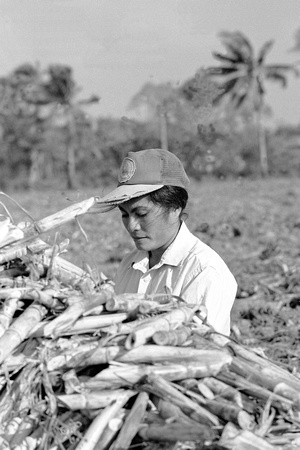
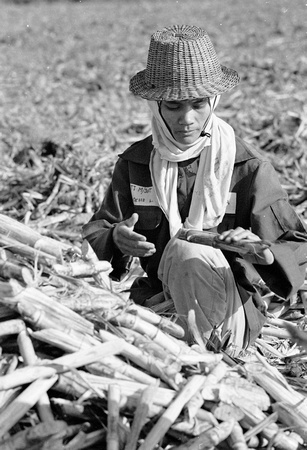
The Negros famine took place on Negros Island in the Philippines in the mid-1980s, during the waning days of the Marcos dictatorship. It was a key moment in the history of sugar production in the Philippines and in the broader political history of the Philippines. Caused by the Marcos administration's efforts to control sugar production through the NASUTRA monopoly held by Marcos crony Roberto Benedicto and by a sudden crash in international sugar prices, it created what popularly came to be known as a "social volcano", with tensions culminating in the Escalante massacre, and with negative effects still felt even after the ouster of Ferdinand Marcos and his cronies during the 1986 People Power Revolution. In 1984, over 190,000 sugar workers lost their livelihood, and about a million sacadas and their families in Negros suffered in the famine. By 1985, a survey by the National Nutrition Council of the Philippines estimated that about 350,000 children – 40 per cent of Negros Occidental residents under the age of 14 – were suffering from malnutrition. The 1985 infant death statistics at Bacolod City Hospital rose 67 per cent, and Negros' infant mortality rose to nearly double the national average, with most of the deaths attributed to malnutrition.


The Philippine Askal Dog
Askal, meaning "street dog", and aspin ", Filipino dog", refer to the diverse population of mongrel free-ranging dogs found in the Philippines.
The term "askal" is a new Filipino word and is commonly used as a derogatory term for stray or mixed-breed dogs that roam the streets of urban and rural areas across the country. It is considered to reflect class discrimination in the country, particularly towards indigenous elements.[1]
The origins of askals can be traced back to two main categories. Firstly, some askals are entirely descended from indigenous dog breeds that have evolved in the Philippines. Secondly, it is believed that dogs were introduced into the country from Mainland Asia, via Taiwan. Excavation sites reveal that dogs served two main purposes: consumption and companionship. Tagalogs, along with other ethnolinguistic groups like the Kalinga and Bontoc, were known to have domesticated these dogs into hunting companions, often forming close bonds, mourning their deaths, and burying them near their owners. They may even have received the same burial treatment as humans. These native breeds have adapted to the local environment and exhibit a range of physical characteristics and temperaments. These dogs have since played an integral role in the lives of Filipinos, serving as loyal companions, guardians, and even working animals.


Askals often display a unique blend of characteristics from various ancestral backgrounds. This diversity contributes to their distinct appearance, temperament, and adaptability. They are highly adaptable and resilient dogs, capable of surviving in challenging conditions. They possess a remarkable ability to navigate the urban landscape and survive on scraps and leftovers. Their resourcefulness, intelligence, and innate street smarts have earned them the nickname "asong kalye," reflecting their association with the streets.
In recent years, there has been a growing movement to celebrate and protect the cultural heritage represented by askals. Various organisations and animal welfare groups are working towards providing medical care, shelter, and adoption opportunities for stray and abandoned dogs. Additionally, initiatives have been launched to educate the public about responsible pet ownership, including spaying and neutering programs, vaccinations, and proper training. Aspins do not have clear lineages that account for their appearance today because they are bred from a diverse mix of mutts and mixed breeds that roam the streets of the Philippines. However, they have a few distinct characteristics. Given their varied background, aspins can come in different shapes, sizes, and colours. The coat can be short-haired or rough. Coat colours range from black to brown, white, ginger, brindle, grey, cream, and red merle. Spots are commonly found at the base of the tail and on the back in a semi-circular fashion. The snout sometimes appears black if the coat colour is brown. The tail is usually held high, and the ears can be floppy, semi-floppy or fully pointing upwards. The bone structure of a native Askal is on the medium range, never as heavy as that of the Rottweiler.


The Rice
In the Philippines, rice production is an important aspect of the country's food supply and economy. It is also the staple food that provides about 35% of the average Filipinos calorie intake and is a major source of income for millions of Filipino farmers. The Philippines is the 8th-largest rice producer in the world, accounting for 2.8% of global rice production. Rice is the most important food crop, and is a staple food in most of the country. It is especially produced in Luzon, the Western Visayas, Southern Mindanao, and Central Mindanao. There are an estimated 2.4 million rice farmers in the Philippines as of 2020. The average age of rice farmers is 56 years; 82% of rice farmers are men, and 18% are women. Many Filipino farmers live in poverty due to a combination of factors, including economic policies, environmental issues, land ownership, and government corruption.


Black rice, also known as purple rice or forbidden rice, is a type of rice of the species Oryza sativa, some of which are glutinous rice. There are several varieties of black rice, including Indonesian black rice, Philippine heirloom balatinaw black rice, pirurutong black glutinous rice, and Thai jasmine black rice. It is also known as chak-hao in Manipur, India and as "kavuni arisi" or "kavuni rice" in Tamil Nadu, India.
The bran hull (outermost layer) of black rice contains one of the highest levels of anthocyanin pigment found in food. The grain has a similar amount of fibre to brown rice and, like brown rice, has a mild, nutty taste]
Black rice has a deep black colour and usually turns deep purple when cooked. Its dark purple colour is primarily due to its anthocyanin content, which is higher by weight than that of other colored grains. It is suitable for creating porridge, dessert, traditional Chinese black rice cake, bread, and noodles. In marketing, black rice may be called "forbidden rice", based on claims that it was once reserved for Chinese royalty. Its rarity, nutritional value, and low yield may have contributed to its association with privilege and imperial use in ancient China.
The Snakes
Negros Island is home to a diverse population of endemic snake species, including both non-venomous and highly venomous species. Environmental disturbances, including the 2026 active volcanic eruption of Mount Kanlaon, have altered local habitats and driven more snakes into populated areas.
-
King Cobra: Highly venomous, massive elapid recently expanding territory into the region.
-
Samar Cobra: Deadly neurotoxic spitter native to the Visayas region
-
Philippine Pit Viper: Camouflaged, arboreal ambush predator with hemotoxic venom.
-
Negros Island Blind Snake: Small, harmless insectivore entirely endemic to the island.
-
Maren's Bronzeback: Active, harmless tree-dwelling snake frequently found in gardens.
-
Common Mock Viper: Mildly venomous, harmless to humans, mimicking true vipers.
-
Dog-faced Water Snake: A mildly venomous estuarine species found in local river upstream networks.
-
Oriental Wolf Snake: Harmless nocturnal mimic of venomous kraits.

The Volcano(s)
The 4 Volcanoes of Negros Island.
Aside from Mt. Kanlaon, there are 3 strato volcanoes, all of which are dormant. Mt. Talinis in Negros Oriental, Mt. Mandalagan and Mt. Silay in Northern Negros. Geothermal activities are present in these mountains. Since these mountains are dormant, they have no imminent danger.


Mount Kanlaon and Kanlaon Volcano are an active andesitic stratovolcano and the highest mountain on the island of Negros in the Philippines, as well as the highest peak in the Visayas, with an elevation of 2,465 m (8,087 ft) above sea level.[1] Mount Kanlaon ranks as the 42nd-highest peak of an island in the world. The volcano straddles the provinces of Negros Occidental and Negros Oriental, approximately 30 km (19 mi) southeast of Bacolod, the capital and most populous city of Negros Occidental and the whole island. It is one of the active volcanoes in the Philippines and part of the Pacific Ring of Fire.
Mount Mandalagan is a complex volcano located at a latitude of 10.65° North (10°39'0"N), longitude 123.25° East (123°15'0"E), in the province of Negros Occidental, on the north of the island of Negros in the Philippines. It is located inside the Northern Negros Natural Park. Mandalagan is a solfataric, fumarolic, potentially active stratovolcano. Mandalagan is also known as Nahigda nga Babayi, or Lying Women, among the Bacolodnons and Negrenses.
Mount Silay is a stratovolcano and potentially active volcano located on Negros Island, in the Visayas area of the central Philippines. It is located inside the Northern Negros Natural Park. The area is accessible through the Silay−Lantawan Road.
Mount Talinis is a complex volcano in the province of Negros Oriental, Philippines. At about 1,862 metres (6,109 ft) above sea level, it is the second-highest mountain on Negros Island after Mount Kanlaon, and the tallest peak in the mountain range known as the Cuernos de Negros ("Horns of Negros"). The volcano is located 9 km (5.6 mi) southwest of the municipality of Valencia, and 20 km (12 mi) from Dumaguete, the capital of the province.
Note: The text of the Waterbuffalo, Sugarcane, Rice, Snakes and Volcanos is copied from Wikipedia and not my own text. Some of the links are working for interested people to further their information.
A year that passed...
The Year that passed… (2024)

It has gone faster than ever. Just a short while ago, we boarded the plane in Düsseldorf to fly to Larnaca to take over our apartment in Nicosia. The truth is, that was nearly a Year ago, coming January 6.
From January to the end of March, we spent our time getting acquainted with life in Nicosia, taking over the apartment, getting it painted and furnished, and acquiring the necessary things for life in a new place, including meeting old friends and making new ones. Besides reading the apartment for habitation and comfort, we explored the Island through day trips to nearly all corners, except the extreme west and the northern part under Turkish occupation. The winter in Cyprus, especially the lower elevations, is like a German autumn, with occasional rain that never lasts more than a day, temperatures that drop to their lowest at plus 5 degrees one day, and many days with abundant sunshine and temperatures in the high teens. The countryside was green and lush due to the rainy days we had. When the time came to fly back to Germany, it was hard to believe that nearly three months had passed. In April, Rose flew to the Philippines for three weeks to look after the house, as the family informed us that termites had taken a liking to the wood ceiling in our bedroom. I tried to get some order in the German garden that had started to look a little like a jungle, and we realised that the plants had already started to grow sometime in March, and we were late cutting the grass and bushes. The 'lovely' German weather made it possible for me to mow the grass, I think, twice in five weeks, but also made it hard to do much because of the rain and the wet everywhere. During these days, the thoughts grew that it might be better to sell the house in Germany and concentrate on living in Cyprus and the Philippines. Once Rose returned from the Philippines after successfully renovating the house's ceilings, we departed again for Cyprus on May 7.
The son of our best friend and my former colleague, Chris, got married on May 11, and we attended the wedding, with a few of my former colleagues and friends. It was nice to see some of them again and exchange views and information on all kinds of topics. Most of them are still serving the UN, and their stories and information on the ongoing war in Lebanon and Gaza were especially interesting. Needless to say, I also photographed the wedding on the side and must say I was happy with the results. We continued to buy small items and decorations for the apartment to complete the setup. Given the urge to photograph, we also travelled around the Republic of Cyprus (Greek Side). Gradually, the weather grew warmer, and in June it reached the forty-degree mark, sometimes exceeding it for several days in a row. The apartment's air conditioning came in handy then, especially at night when it could be a bit more humid than one feels comfortable with. Still, I can say that it was not unbearable and stifling, as we had experienced in Pakistan during the pre Monsoon weeks and the rainy, Monsoon, season. Evenings and nights saw lower temperatures in the mid-twenties, and often it was quite comfortable sitting on the balcony, enjoying the breeze coming from the north via Morphu Bay. Our daily walks in the river park near our house have to be either in the early morning or late evening now. The walking path is well-lit with solar-powered lamps, so that was not an issue. Towards the end of June, we drove to the western Troodos mountains and spent a night in Kato Pyrgos on the north shore of the Greek part of the Island. We were the only non-Greek-speaking guests in the hotel, but that is never an issue in Cyprus, and eighty per cent of the population speaks reasonably good English. We enjoyed our stay and always felt welcomed wherever we went. June was hot, but July and August are usually the hottest months on the Island. As the earth quickly dries out, it can often get dusty when the wind blows through the Mesoaria plain and also occasionally the Sahara Desert sand makes its way to the Island when wind conditions from the south or east prevail.
At the end of June, it was time to say goodbye for a second time to the Island home. In the second half of June, the decision was made to sell the house in Germany. I had contacted the Realtor I had approached two years earlier, and we had agreed to meet on July 3 in her office. So when we left Cyprus on June 29 and took off from Larnaca Airport, we had a clear target: to sell the house and make Cyprus our next permanent home. Touching down in Düsseldorf that night, we were greeted with heavy rain and strong thunderstorms. Previously, in April, the garden was a jungle, and now the hedge had grown very high, but I had set up an appointment with the gardener to come and cut it right away on July 1. The appointment with the Real Estate Agent, Mrs Kagan, went very well, and a week later, the first family came to view the house and grounds, followed by another family and another one during the first week of August. In the following months, the process of selling the house gained track and finally, on November 4 we were able to sign a contract for the sale of the house with a notary public. This triggered a lot of action, cleaning up the property and the house. Since returning to Germany upon my retirement from the UN, we had ordered five skips to remove all kinds of items from the house. The last of the skips was collected recently on December 23 2024. It was, and, while writing this, is still an experience to clean a house of items collected over four generations. It was a little bit like an archaeological dig, mostly focused on documents, old photographs, and old trinkets. Even the documents I kept over decades surfaced again, from old school letters and notebooks to Salary statements from the BGS and Police to restaurant bills from the Pamir Restaurant in the Intercontinental Hotel in Kabul from the summer of 1983 for two whiskey colas. Some of these memories I kept; most of them went into the garbage. I am finding this the most difficult part of clearing out the house.

On November 19, we again boarded an Eurowings Airbus to return home to Nicosia. This time, the reason was to attend our friends Chris & Ioanna's wedding on November 30. They had decided to spend their remaining years together, and I had the honour of being Chris's best man. The three-day event went smoothly and was very enjoyable, not the "fat Greek wedding" of the movies but a Greek wedding nevertheless. This trip was short, only three weeks, as we had to continue to clean out the house and prepare for our upcoming move. We travelled around just a few times and mostly spent time in the apartment or with our friends.
So here we are now, on the last day of the Year 2024. As usual, it is cold and windy, wet and damp. The time for handing over the house is approaching fast, with only three weeks to finalise what needs to be done. The Packers are coming in two weeks, and the departure from Germany is set for January 23, flying first to the Philippines due to the favourable weather at this time of Year, and then on March 6 to Cyprus to take up our residence there. I will discover how easy or difficult it will be to draw to a close our presence in this house, which has been the Voss family's home for four generations since about 1870 or close by.
A big thank you to all of our family and friends who helped us with many things, enabling us to do what we do and follow through with our plans to relocate to our Island home. Your help and support have been invaluable to us, and we hope to do the same in kind one day. Rose and I are wishing you a great, happy, and healthy New Year and all the very best for...

A Journey to the heart of the volcano...
Located in the province of Zambales in the Philippines, Mt. Pinatubo is a famous stratovolcano that last erupted in 1991, causing significant damage and loss of life in the surrounding areas. However, today the area has become a popular hiking destination for adventure seekers, especially those looking to witness the stunning beauty of the crater lake at the top of the mountain.
 The hike to Mt. Pinatubo is not for the faint of heart. It involves a gruelling 4x4 drive through the Lahar desert, river crossings, steep ravines, and a challenging trek through dense jungle vegetation. But for those willing to put in the effort, the reward is truly breathtaking. The journey begins with a bumpy and adrenaline-filled ride in a 4x4 jeep through the lahar desert, a surreal landscape created by the 1991 eruption. The rough terrain can be both exhilarating and nerve-wracking as the driver manoeuvres through the dry, rocky landscape.

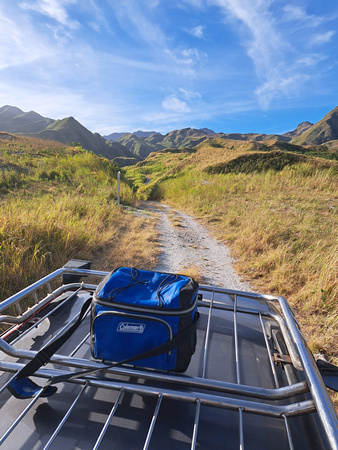 After the bumpy ride, the next challenge is crossing a river, which can be dangerous during the rainy season. A skilled guide will navigate through the water, ensuring that everyone reaches the other side safely.Once across the river, the hike truly begins, and the path becomes increasingly steep and challenging. The presence of an Aeta native guide is invaluable as they have lived in the area for generations and have a deep knowledge of the terrain.As the hike continues, the terrain changes and the group must navigate through boulders and water crossings. The beauty of the surrounding jungle vegetation provides a stunning backdrop to the challenging hike.
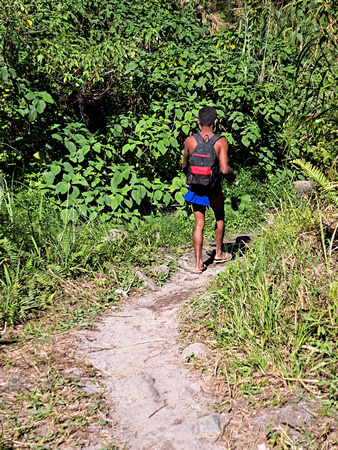
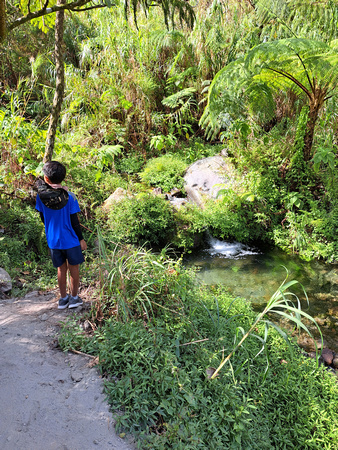 Finally, after several hours of hiking, the group reaches the top of the mountain and the crater lake. The view is breathtaking, and the exhaustion from the hike quickly fades away. Cliffs and an impressive crater rim surround the turquoise-blue water of the lake.The hike back down the mountain is just as challenging, but the memories of the adventure and the stunning photos captured along the way make it all worth it.


 In conclusion, the hike to Mt. Pinatubo Crater Lake is a truly unforgettable adventure. From the thrilling 4x4 drive through the Lahar desert to the challenging hike through jungle terrain, and finally the breathtaking view of the crater lake, it is an experience that will stay with you forever. Just make sure to come prepared with good hiking shoes, plenty of water, and a sense of adventure.
The Island of Aphrodite....
well, Cyprus of course. Travelled to the Island for two weeks in September 2022. Initially wanted to check out apartments but managed only to have a look or option on two that might become available in 2023. The rest was spent with our friends, chilling on Governors Beach near Limassol or taking sojourns through the Troodos Mountains, enjoying good food and drinks. That is what a holiday is meant to be. Flying from Germany was as it used to be, the airport not too full but neither empty. The dreaded face masks had to be worn since the flight originated in Germany, also from yesterday it is fine not to wear them, makes no sense either way, but that is with so many things lately. Anyway, the flight attendants were quite relaxed with implementing this rule, so overall it was ok. In Cyprus hardly anyone was seen wearing a face mask; the few that did were probably Germans. Beats me. It was still hot during day time and sometimes quite sultry at night, even in Nicosia. The water along the coast was still nice and warm and it was enjoyable to swim in the sea. We went over the "Green Line" in Nicosia, i.e. visited the northern part that is under Turkish Occupation. This is relatively easy, just show your passport or ID card and off you go. The "northern" part feels more like the Middle East, and in fact, the whole Island belongs to the Middle East, geographically and culturally as it is part of Europe only politically and administratively. The Schengen Agreement on free movement does not apply, since the Island is divided and there is no real control over who crosses from the North to the South through the UN-controlled Buffer Zone. Many migrants that try to reach mainland Europe are now routing themselves via Cyprus, having travelled to Turkey and the northern part of Cyprus crossed through the buffer Zone to the south and then trying their luck to travel onwards. Menial jobs are now often performed by migrants from south Asia or West Africa and over recent years they have become more plentiful in the streets of towns and even villages of the southern part of the island (the north as well I guess).
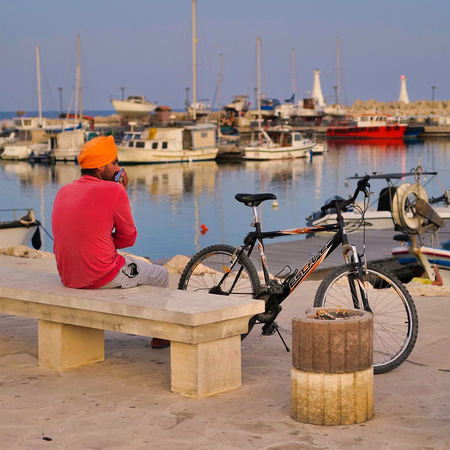
They often come to houses, looking for odd jobs like gardening and other stuff, trying to make a living. Every time I see them, it can break my heart to realize the hardships they must have endured to reach this place, the dangers and how big the desperation in their home countries must have been to set out on these journeys into the unknown, with the hope of reaching distant shores and a better and more prosperous and safer life. Many are without their families, although a good number I observed to be having their families with them, which actually is good but not easy at all. One can only hope that they are all treated humane and fairly, but deep inside we know that this is not the case. We are all humans and nobody is better than the other. As humanity there are big challenges ahead of us, collectively, everyone.
I did not really continue with photographing the last divided capital in the world, somehow it did not seem right this time. As the political process looks, it will remain divided for longer than people on both sides hope for, so I might come back and continue with that project. This visit also made me feel that indeed Cyprus might be the place to settle for good when finally leaving Germany, i.e. going into Exile. I will see if that holds true, as my four-month-plus journey to the Philippines and South-East Asia is only two months away. Will be interesting if I still feel so strongly for Cyprus after that time. Time will tell. It always will.
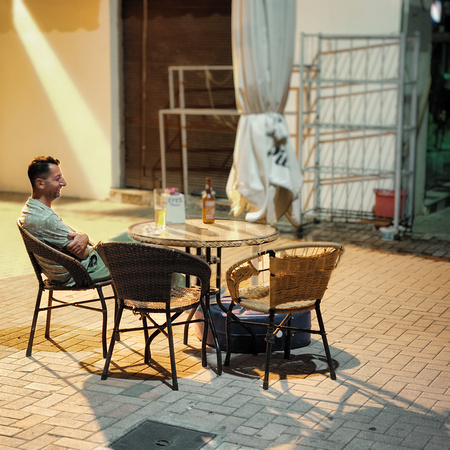
Arriving back in Germany made me feel like leaving again immediately. In October we will be travelling to Vienna, the second time this year. I like this city, although the Austrians are not much different at all from Germans, especially the politics going on currently. Nevertheless, Vienna is a nice place and I hope to do some more street photography. I love the atmosphere of this city, one can feel it is a capital, many people from other countries abound, just different. In Cyprus, I used my Leica Cameras and the Ricoh GR 3, which seems like a good combination for the photography I am currently doing. Having too many cameras is probably a stupid first-world problem, but indeed it does not make it easier what to take on what trips. For the Philippines, I have not decided yet, on the Leica's, which are heavy, or the Pen F with the array of lenses that are much lighter. Oh well, I feel ashamed to even have to think about it.
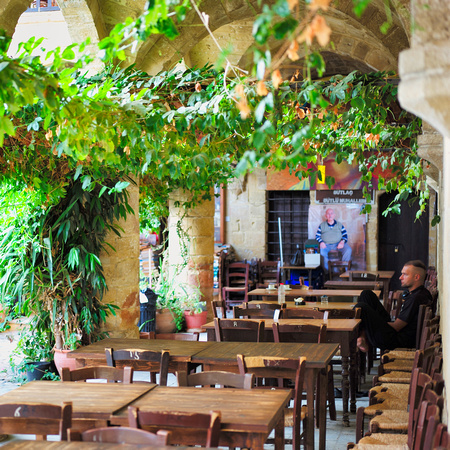 So this is it for the time being on the trip to Cyprus. Could write much more, but not really relevant as it is holiday stuff. I do love Cyprus, and with any luck it will be our new home soon, maybe as early as next year. I keep on working on it. Peace love and light to you all.
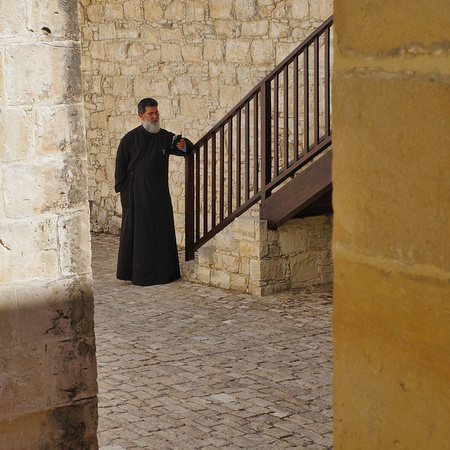
The missing years...
are the ones since 2018. I have not been active in updating the blog anymore. As an interim, I wrote a short blog post about Purok Masingayahon, which was a copy of a small book I made and I only had to copy and paste it into the website. So what happened? Well, I was around of course and the year 2018 became very hectic as I finally managed to retire from my job and I had to move from my place where I lived in Lebanon. I ended up in my home country Germany because for family reasons. Family is family, of course, however since I had not lived in Germany more or less since 1983, I was not too happy to return. Not at all. With all the ongoing obligations at home, I had no desire to write about the same. In these missing years, I did manage to travel a bit, in and outside of Germany. Vienna, Cyprus, Singapore and the Philippines, as well as Belgium, Strasburg and The Netherlands were places visited. In Germany, it was the Baltic coast, Hamburg, Munich and Stuttgart of course, with a short visit to Poland as well. Since the dreaded Covid crap started, with all its restrictions, lock-downs and other nonsense, it became even more problematic, but we managed to do a few of the above trips. After the passing of my father in early 2020, I decided that I was not going to stay in Germany and made plans to sell the property and move to Asia or maybe Cyprus, just not staying here. The "pandemic" did not make this easier, on the contrary, with all its restrictions, quarantine etc. and travel bans it made it much more difficult to plan so we are now at the end of 2021 and I am still here. I did manage to contract a realtor and have the house checked by an architect. The German buerocarcy does not make it easier to sell the house because of its location in a so-called 'green' zone, however, it can be done but it is this much more complicated. So the plan is to finalize the sale in 2022 and move the hell out of Germany.
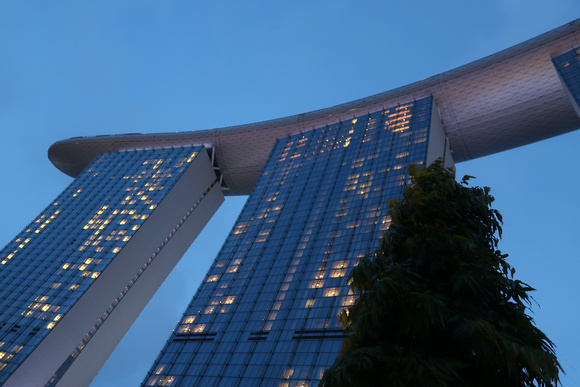
The year 2020 started like any other previous year. I was travelling to the far east, this time via Taiwan with China Airlines and I enjoyed the trip and experience of flying with China Airlines. After landing in Manila and connecting with friends and family I was off for a week in the province in the southern Philippines. This was followed by a week in Singapore and another week in Manila, where I started applying for my permanent residence. While waiting for the process, I went back to the province and continued on my project concerning the plight and hardship of the sugar cane and general farm workers that often live in bad conditions and are treated not nicely by their Haciendero employers. I wrote about this already in a short form last year under the title Purok Masingyahon. While doing so, already reports emerged of the virus that had been discovered in China in January, and where while in Singapore more concrete information transpired so much so that a case was discovered in Singapore on Sentosa Island and the Hotel I was staying in implemented temperature checks for anyone entering the building.
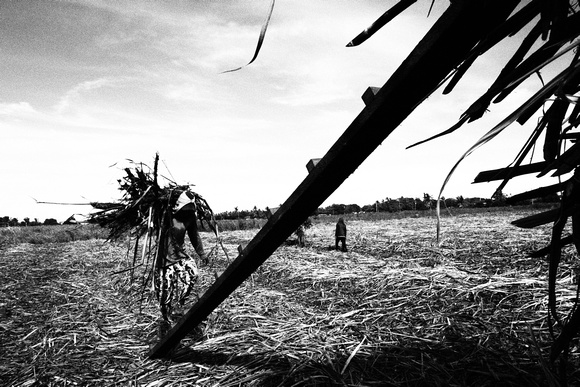
In the province, I continued with one of my projects of photographing the people that harvest the sugar cane. These are often migratory workers that move around from province to province and often live under appalling conditions. In Negros Occidental, the part I was living in, much of this work will be performed by labourers of the various haciendas, that, often equally live in squalid conditions and are not treated very well by the big landowners, i.e.hacienderos as they are referred to to locally in a Spanish term. News reached me that my father had been hospitalized with a mild stroke, so I decided to travel home as soon as possible. Passing through Taipeh airport on my way back to Frankfurt had already a bad foreboding, it was nearly empty. When I had transmitted through it seven weeks earlier, it was as full as it could be. In Frankfurt, the same picture, the always full and busy airport was nearly empty as well. My father passed away three weeks after my return, his condition worsening by the day, with other ailments adding to the mild stroke. In the end, the doctors informed me that there was nothing that could be done for him anymore. Because of the 'pandemic', it was only possible to bury him six weeks later. After that, all the bureaucracy of the inheritance of the property and related issues took my energy and I felt I had nothing to write about that was really of interest and so I forgot that I even had this page and blog. I was reminded once the payment became due, but again had no energy to write or display any of the photos that I had been taking in the meantime.
Well what to say, even this is now taking me forever to complete this blog entry. To make it shorter, during the so-called Pandemic we travelled to Cyprus, Austria, Belgium, Poland as well as Paris and in 2019 also to Lebanon. I continued photographing and bought new equipment along the way. In the Philippines I damaged my Olympus OMD, it fell from my shoulder and cracked the sensor. I replaced it with an Olympus Pen F which is a very nice camera that I cherish very much. Currently, my activities only include posting sometimes photos to Instagram @monsoonlight00 and making yearbooks for 2019 to 2021. I have ideas for several publications but have not come around to working on them seriously, although some drafts exist in the publishing software. If all goes well, we will be going to Cyprus again and I want to continue my photo series on the last "divided capital", i.e. Nicosia, in the world. The latter from the end of November planning to go to Asia, via Singapore to the Philippines, Malaysia and maybe Indonesia. In the Philippines, I want to continue to photograph the sugar cane workers and poor landless Campesinos. I hopefully will also make it to the rice terraces of Banaue, one of the Asian wonders of the world. I will try to update this blog from now on a more regular basis hopefully. for now, this shall be all for this intermediate text. Peace, love and light.
Purok Masingyahon
Purok Masingyahon
Driving south on the Negros National Highway, right after the bridge over the Bago River is the left turn towards the Maao Township and the Kanlaoon Volcano National Park. As mostly on Negros Island and especially in the province of Negros Occidental, the countryside is predominantly covered by Sugar cane or Tubo as it is called in the local language. The roads are often clogged by the slow moving “Tubo Trucks” that move day and night from the sugar cane fields and haciendas to the sugar mills that are located all over the island. Often the trucks move in convoys at night and are halted on the side of the road before dawn in order not to move through the rush hour traffic in Bacolod.
Once you take the turn from the Negros National Highway South on to the road to Maao, after a few hundred meters, one comes to the locality of “Crossing Bago”. Until the 1970, this was the point where the old highway crossed the Bago River and a bridge had been built before World War II and hence this hamlet was called Crossing Bago. The bridge was decomishend in the late 1980 and completely destroyed in one of the violent Taifuns in the early 2000’s and Crossing Bago has hence descended into a little known locality on the road side to Maao and Kanlaon Volcano National Park. Today it consists of a few dozen small houses and a church of the local parish. The road to Maao is dotted all the way with similar locations, small villages that house the people and families of the workers that labour on the various ‘Haciendas’ along the road. Sugar Cane is the predominant crop with rice now also making a larger appearance. If one drives along any of these country roads on the island, there is always some Tubo harvesting going on.
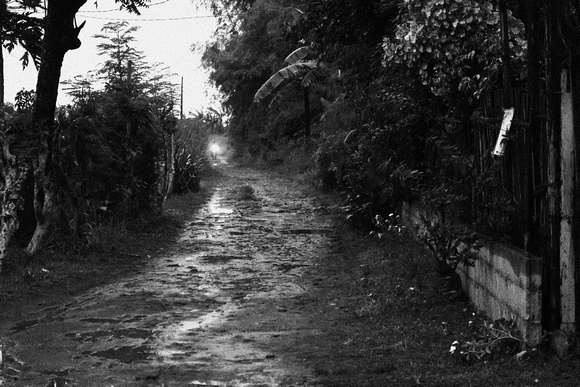
Purok Masingyahon is located in one of these Tubo plantations, off to the side of the Bago-Maao road. One reaches it via a rough dirt road, with turn off from the main road nearly invisible. Only people in the know see where the turn off is, marked by a light pole and a stick with an empty ‘sprite can’. At night, often a light is burning on that light pole so the people who get off their Jeepneys or buses know where to go. There is no road sign or other to point in the direction of the hamlet. The rough road leads into another world. On both sides usually high grass and sugar cane grows, and at night it is advisable to have a flashlight handy to shine in front of you on the track as there are snakes and monitor lizards crossing sometime from the water canal to the sugar cane or vice-versa. Purok Masingyahon consists of rather well built traditional houses, i.e. a combination of stones, bamboo and other wood or of stone bungalows. Many of the inhabitants of the Purok work either on the Hacienda, with the dominant haciendero being, for now, still the Javellana family. Others have progressed and work in the capital manila in various occupations or as Overseas Foreign Workers (OFW). Many of them have lived all their lives in this location, gone away and have come back, to settle on their ancestral land and live with their extended family. Many are interrelated to one another, which makes them one, mostly happy, big family.
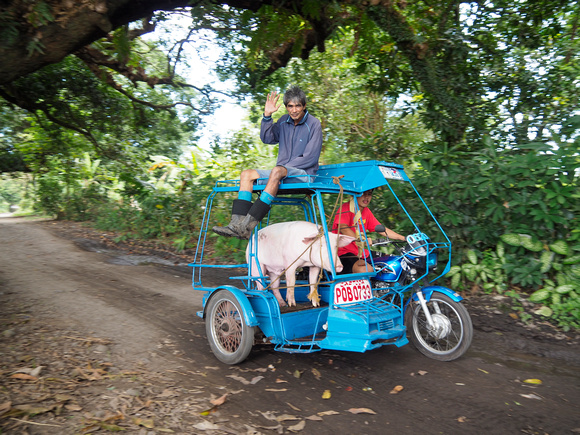
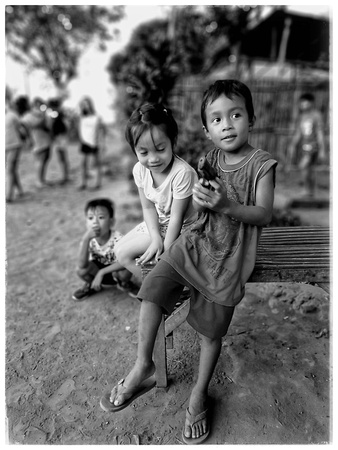
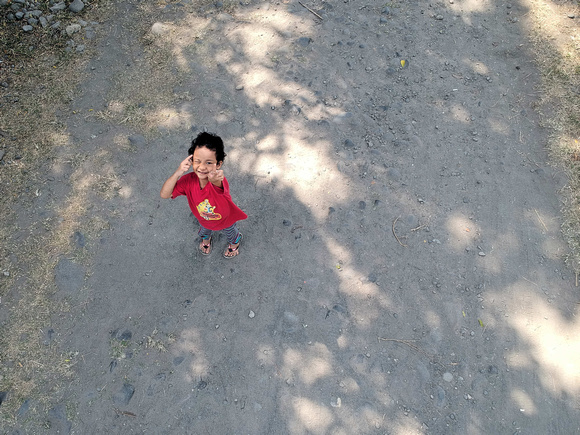
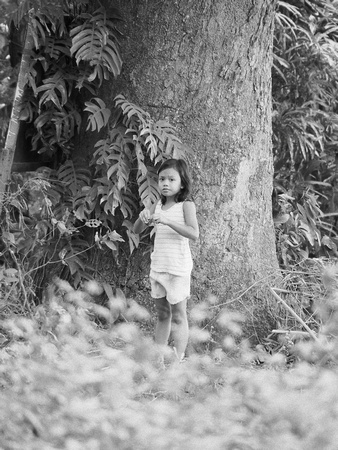
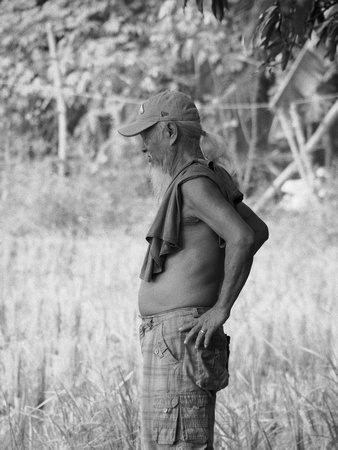
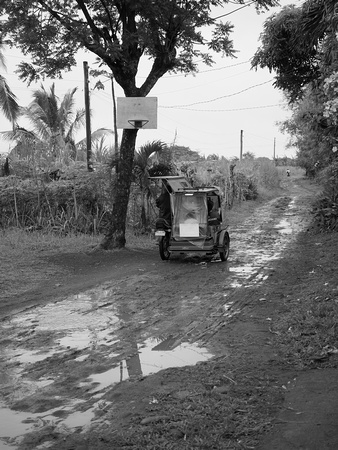
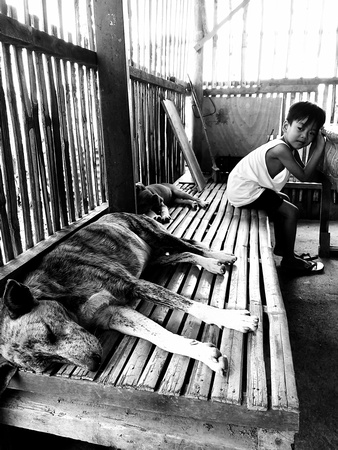
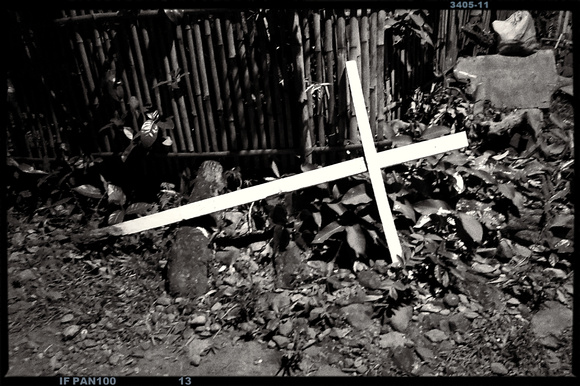
There are many things that are plenty in the Purok, like plenty of dogs, plenty of children, plenty of chicken and often also plenty of happiness, which by the way is the meaning of Masingyahon. I, have been travelling to visit Purok Masingyahon for more than 20 years and have enjoyed each and every stay with the friendly people of 'my family' and in extension the larger ‘family’ in general. Known to each and many as ‘Tito Achim’ I have been running around and taking photos with my cameras all these years. Initially with my analog cameras and later with my digital cameras, all of various makes. To my disgrace I have shared very little of those images and will now try to make up for this through creating various forms of publications that I will distribute to my family for keepsake. I am starting with this one, wholy in black and white as this is a photography field I feel strongly connected to. Hopefully people will enjoy watching these images of real life in Purok Masingyahon as much as I enjoyed photographing them. Thank you to all for accepting me into your life and let me run around and take photos of you guys all the time. I love you all!!!!
Tito Achim :)
A new beginning...
For a year, this time 2018, has arrived. The year is still fresh or can one say innocent? Is it really as events have already taken place that led to death and destruction during the first day(s) of the year. So from this, we will see what this year will bring.
Here in the eastern Levant, the year ended with rain and started with the same, which, indeed is good news. Although it dampened the new year celebrations in downtown Beirut a bit, nevertheless, considering that so far little rain has fallen in this winter, the rain is very welcome. As forecasted, more is to come towards the end of the first week of the year. This really is good news.
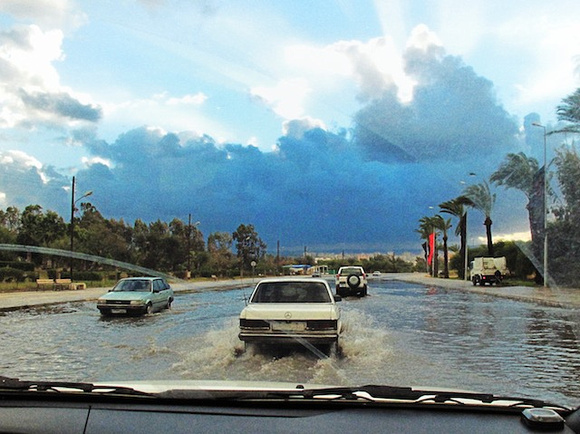
Heavy Rains but very welcome
Looking out the window onto the Mediterranean Sea, I notice Seagulls cruising by, circling and coming back and forth, patrolling the shoreline, which does not happen to often. It is a pair of gulls, which was joined by a flock of Cormorants flying south. The usual gang of Indian Myna birds, which seem to have multiplied a lot since I first noticed them a couple of years ago, also is roosting temporarily and noisily on the tree outside my window. They seem to have some great group dynamics, always on the move, never alone, at least a duo of two hopping around somewhere and calling each other. In addition to those, there is also at least a pair of Palestine Sunbirds that frequents the Hibiscus flowers outside the window on a daily basis, absent only if it is raining heavily or when to windy, which prevents them from flying due to their delicate and light weight.
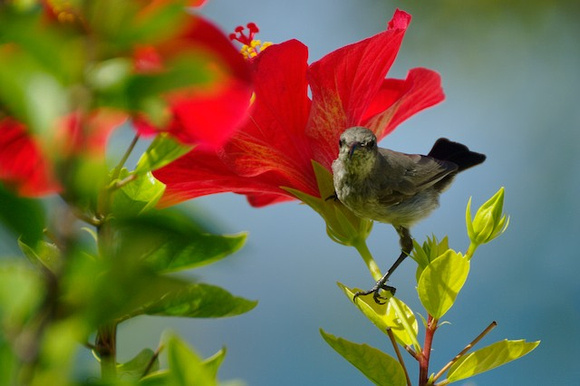
Palestine Sunbird
The new year will start with some travelling, first to SE Asia for three weeks, then shortly after that to Germany and Cyprus, but those dates are not fixed yet but will most likely happen in February or maybe March.
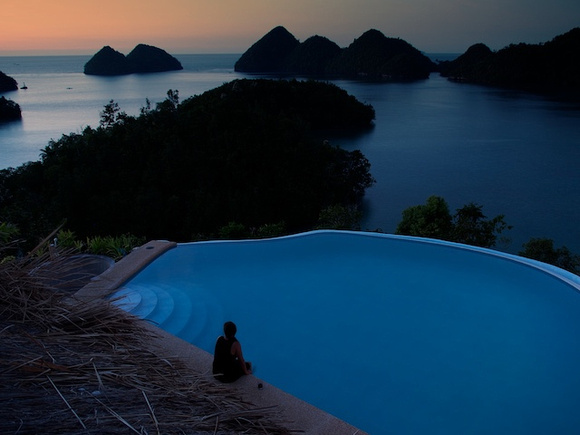
The Sulu Sea after Sunset
Photos that I will take during the cause of the year, I guess, will be mostly with the smartphone, the Olympus cameras, the X100s and maybe the Canon G-10. It really varies on what I am looking for and whether I remember to bring a camera along. In reality, the smartphone is a great substitute camera that one more or less has always around, which a totally acceptable image quality, especially in good light. An App like Snapseed then will perform the rest to create a pleasing image out of it.
So, with the travels to begin next week, I will post more after I return, also about the experiences that I have made with the cameras on the trip, most likely the OMD, G-10 and my new drone, the DJI Spark. I am excited to go and engage in the Photography and filming, but I dread the long flight to the Far East, it is just to long to sit around in an aircraft cabin. But what to do. So bye for now, it is a new year and a new beginning, more later.
Good Bye 2017...
Another year has passed, where did the time go. The new year is merely a day away and as always one ponders what it brings. The option are plentiful, it can go either way, I think all options are on the table as certain people used to say. It has been unusually warm this year, the winter as we know it has yet to come. Only little rain has been received and the mercury is every day close to or above 20 Celsius, way to much. If it continues like this, with little rain, then the next crisis in the country is already programmed, i.e. the electricity crises will be joined by the water crises, which combined with a lurking trash crises could make for a lethal mix. So please let it rain and lots of it.
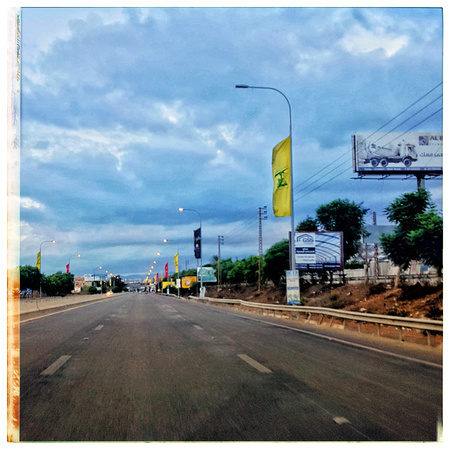 Early Morning drive - southern Highway
What to say about the past year, in retrospective, it passed fast and remembering last years new year’s eve in Germany, hard to believe it is twelve months later now. It had brought some travels to south-east Asia, Germany or course, Cyprus as well, one could say the usual suspects. Nothing extraordinary happened during the year, some illnesses that were overcome, getting a bit older every day, feeling a bit more tired more so often. With regard to photography, two new lenses were acquired, first the 7-14 Olympus and then later the 30 Macro lens, also from Olympus. Both are superb lenses and I am very happy to have acquired them. Another purchase was a drone, the DJI Spark which is a recent acquisition. It gave me a bit of a headache to figure out how to set it up properly, attributable to my impatience and lack of resolve to read lengthy explanations on how to do things. Thanks to the help of YouTube and various DJI forums I finally figured it out and made my maiden flight in the apartment as my present location is not the most conducive for drone flying. The real test will be soon in SE Asia where I will take it into outdoor action and hope it can add some more interesting perspectives to my little movies I am making.
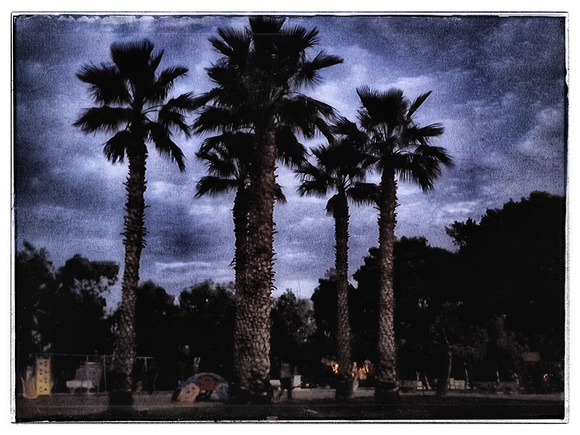 Afterglow - Five Palms
So, 2018 is coming soon, what will it bring, what to expect. Well I am uncertain yet on how it might go, since of course I don’t know how it will go, as I can not see into the future. I have my eye on early retirement, in summer of the year, no exact date yet. Analyzing the possible scenarios, sometimes I am not so sure if it will be the right decision as I sometimes believe that I may not achieve what I want to do. If indications prevail that early retirement maybe counterproductive at this time, I might, as hard as it will be, decide to push it a bit backwards until the time is right and pieces have been put in places to make it a success. Also I am looking forward to jump ship, the water must be right to jump, no sharks or similar around so I can make it safely to shore, sort to say. Will be travelling to SE Asia soon, then on to Germany and possibly again to Cyprus in order to canvas for apartments that would offer me the place for a retirement retreat. We’ll see how it goes
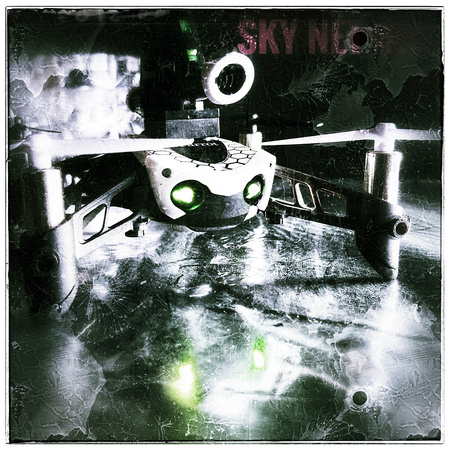
Back from the future - I'll be back
Next year could get hot politically, internal and external. To much is happening in the region, some dangerous developments in the last days and months that may have tremendous repercussions. As always time will tell and despite all the negative signs one has to remain positive, despite it is not always easy. I still have to do some photo assignments to do for my own projects, like ‘Rue Hamra’ and some others for my photo book on the place here.
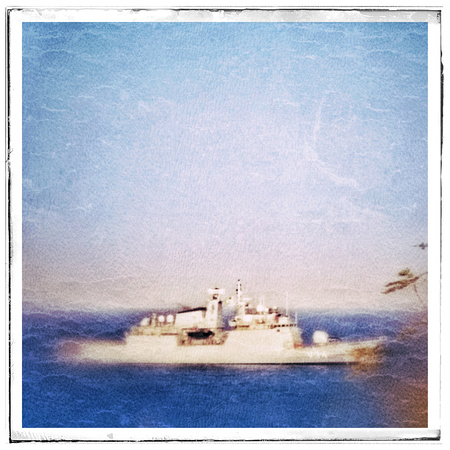
Southern Seas - Frigate and palms
Anyway, lets remain positive but lets keep an eye on developments and the monkeys with hand grenades in top positions.
HAPPY NEW YEAR 2018!
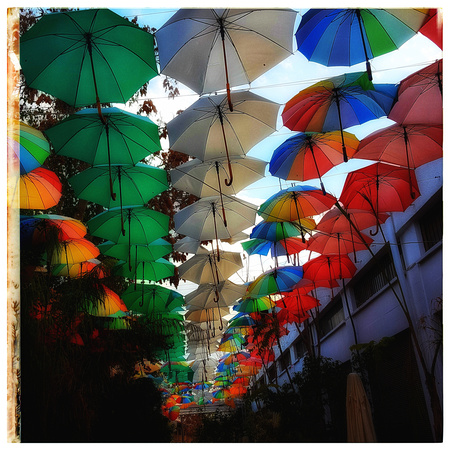 The umbrellas may protect us in 2018!